

Progress with confidence.
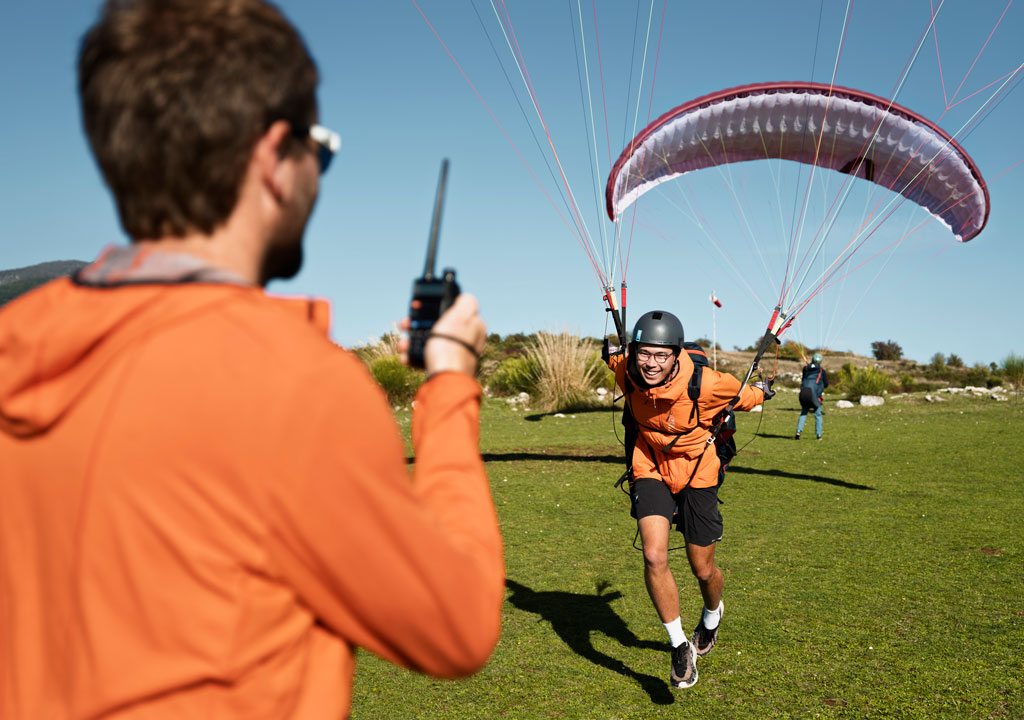
The MESCAL7 was designed with a clear goal in mind: to give new pilots the easiest, safest, and most intuitive introduction to paragliding. From your first meters on the ground to your first thermal flights, the MESCAL7 accompanies you on a clear path – building confidence! So you can develop your flying skills safely and joyfully.
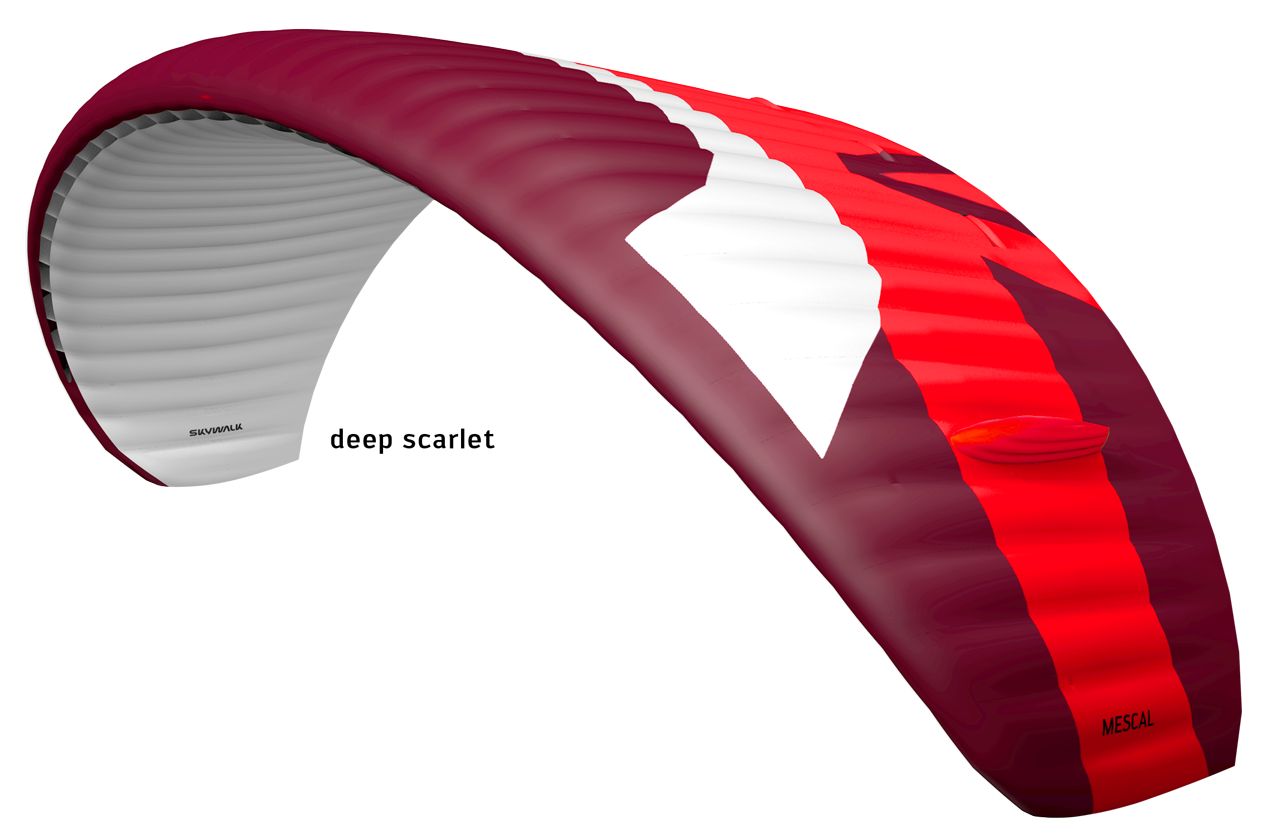
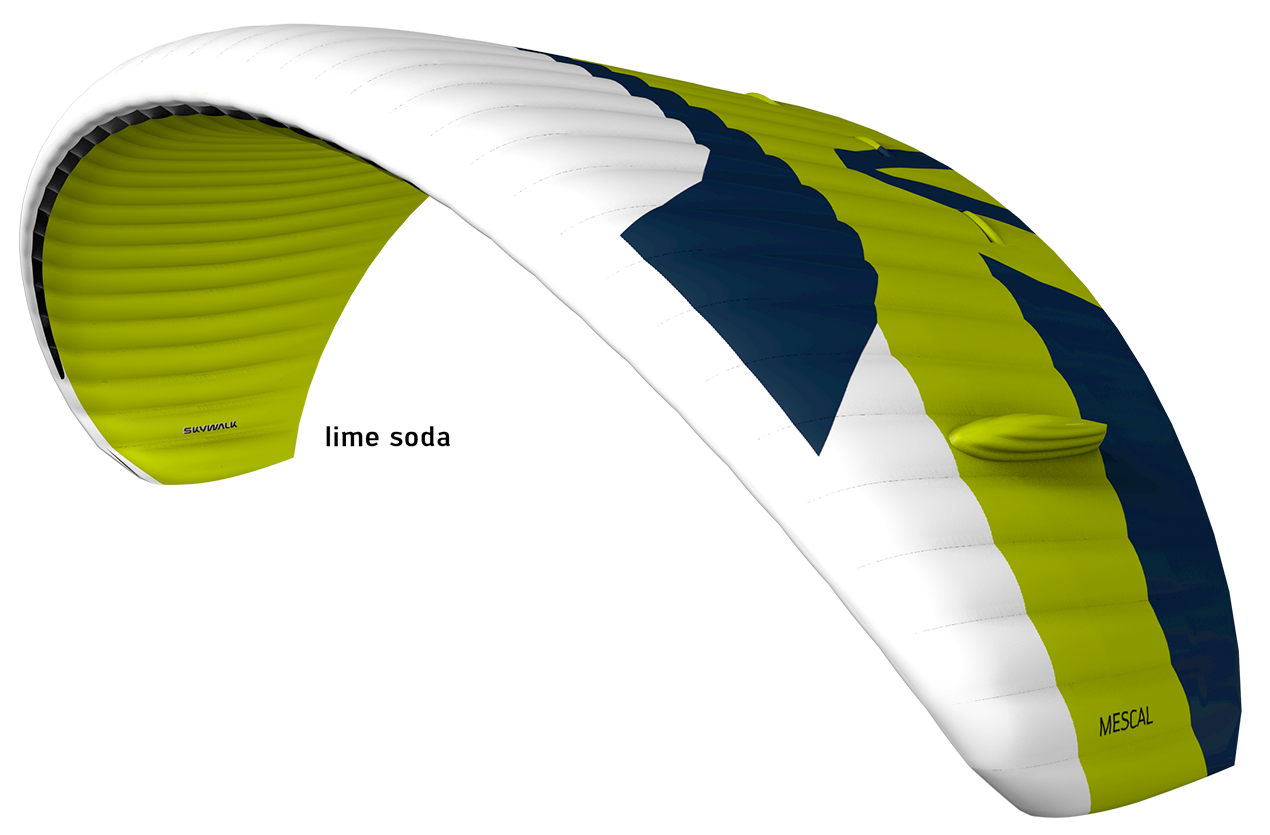
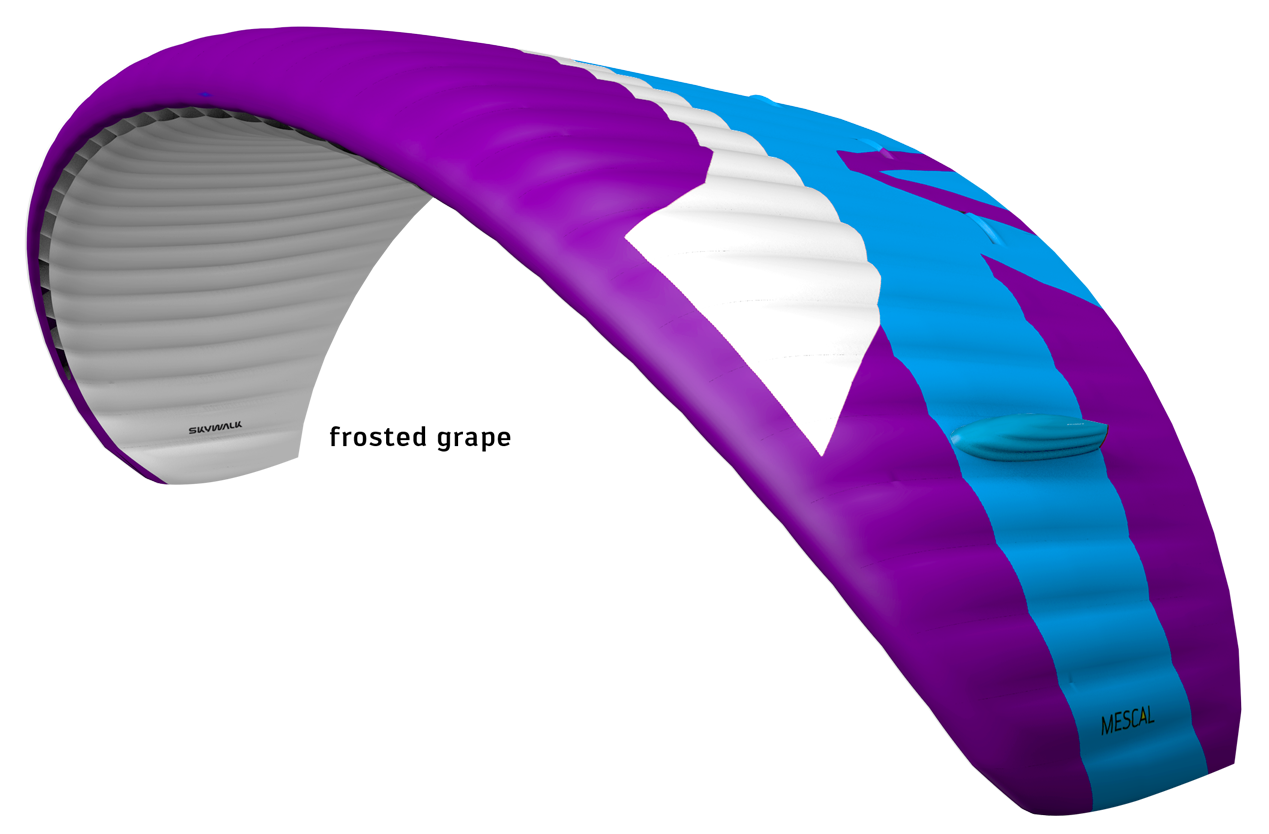
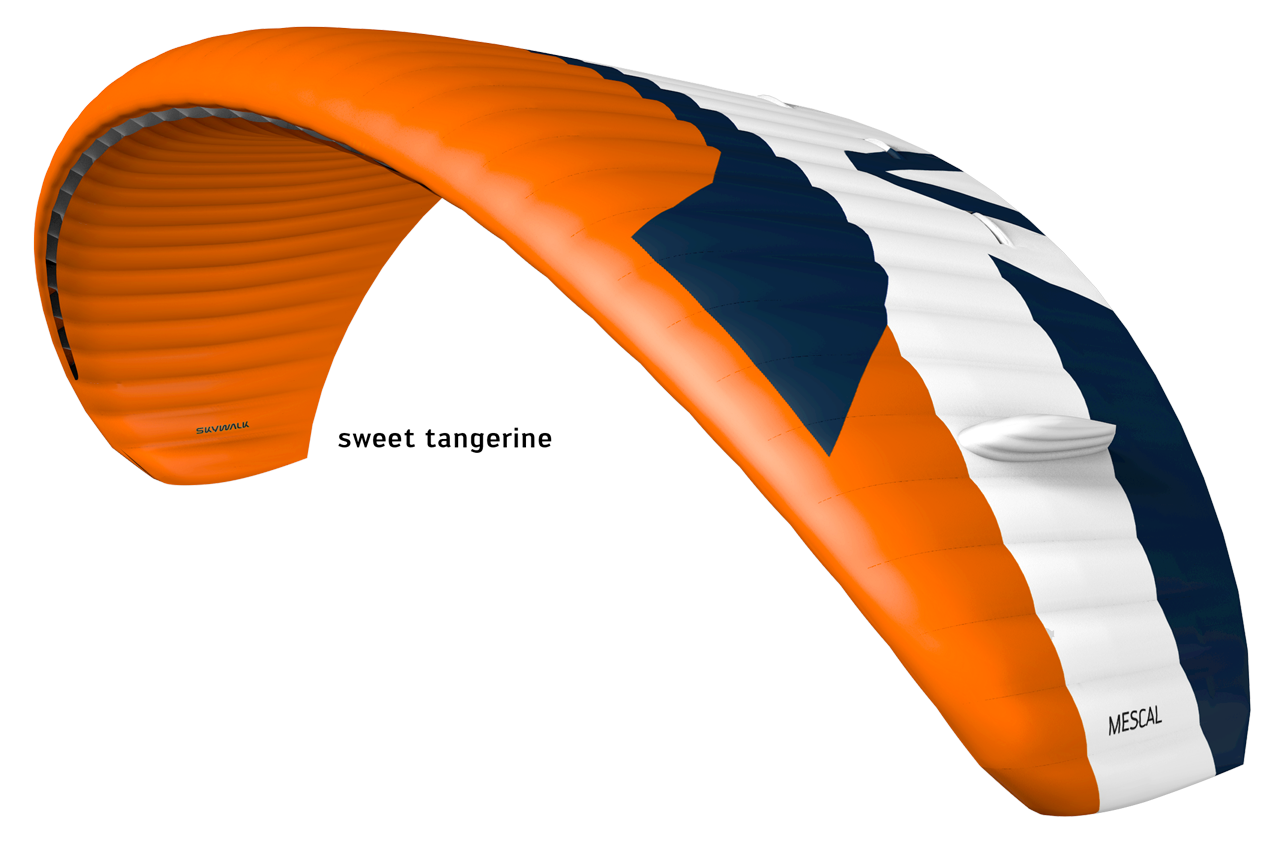
Your reliable partner for secure and sustainable learning progress.
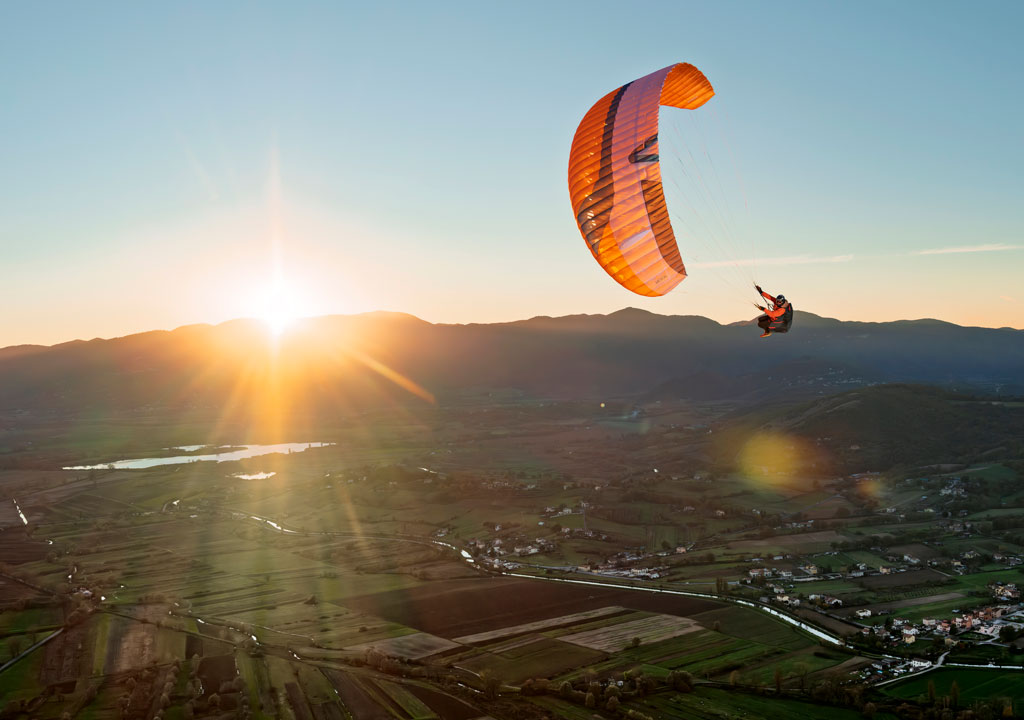
From the practice slope to your first cross-country kilometers.
Flight characteristic
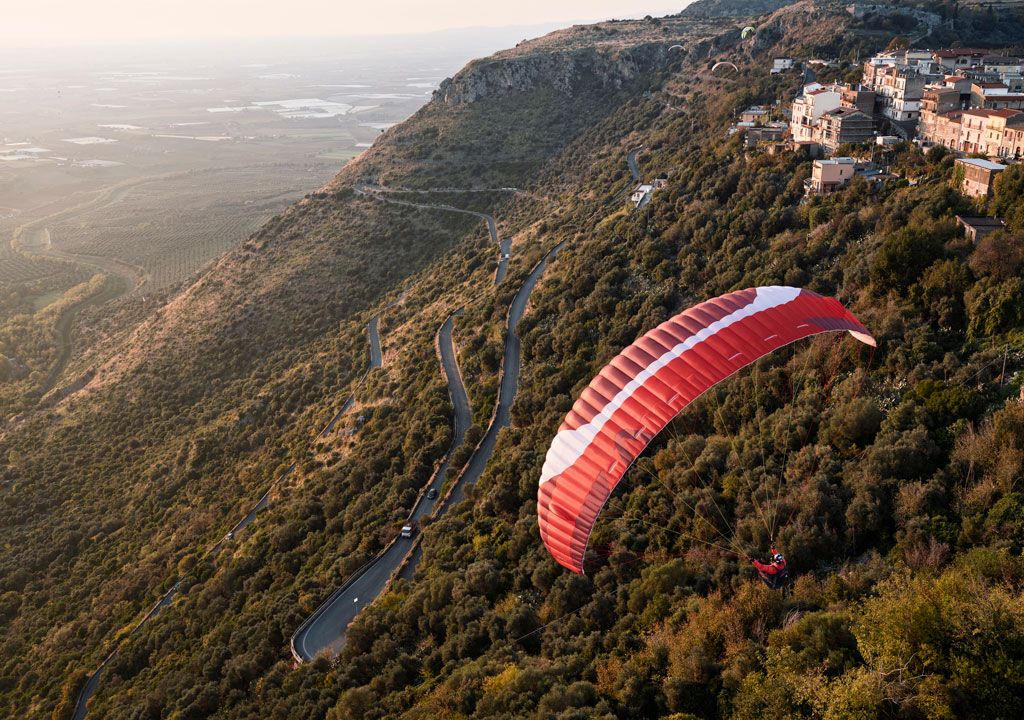
During the development of this generation, the focus was consistently on making its handling as easy as possible and significantly increasing its safety reserves once again. Particular attention was paid to balanced, forgiving handling, which not only conveys a high degree of safety, but also creates the perfect basis for your flying progress. The MESCAL7 impresses with precise, clearly defined responses in all flight phases, as well as pronounced roll and pitch stability, which gives you control and peace of mind at all times.
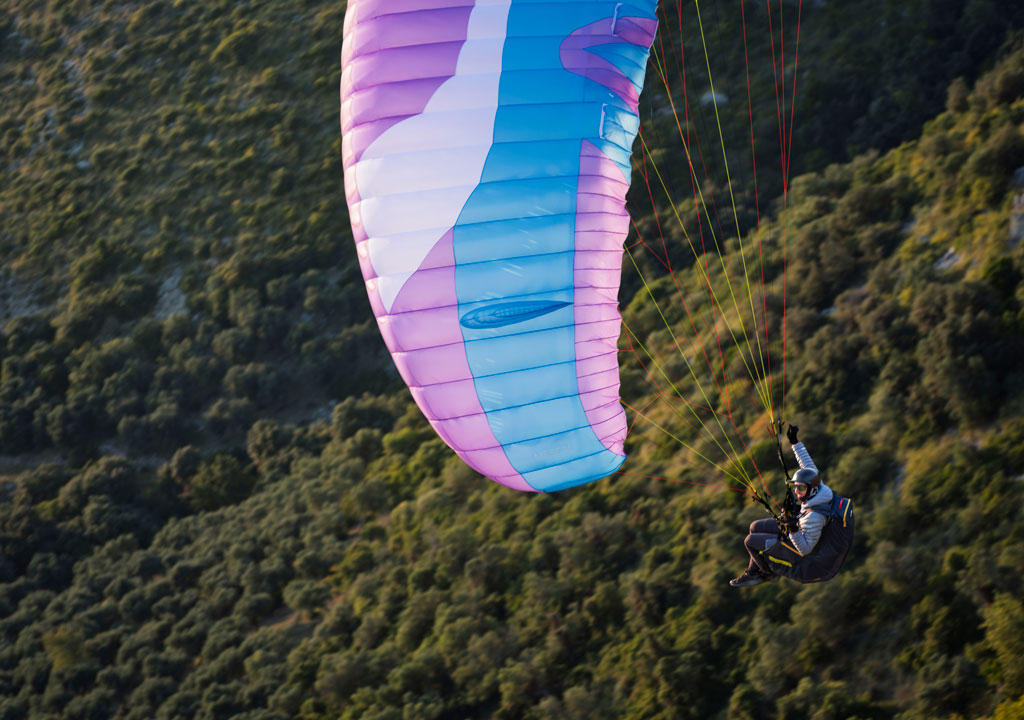
With 40 cells, an aspect ratio of 4.8, and modern design details such as mini-ribs – typical of higher-rated gliders – and perfectly positioned winglets, the MESCAL7 sets new standards in the entry-level segment. The winglets noticeably improve spiral stability and contribute to a smooth, stable flight feel without changing the basic characteristics.
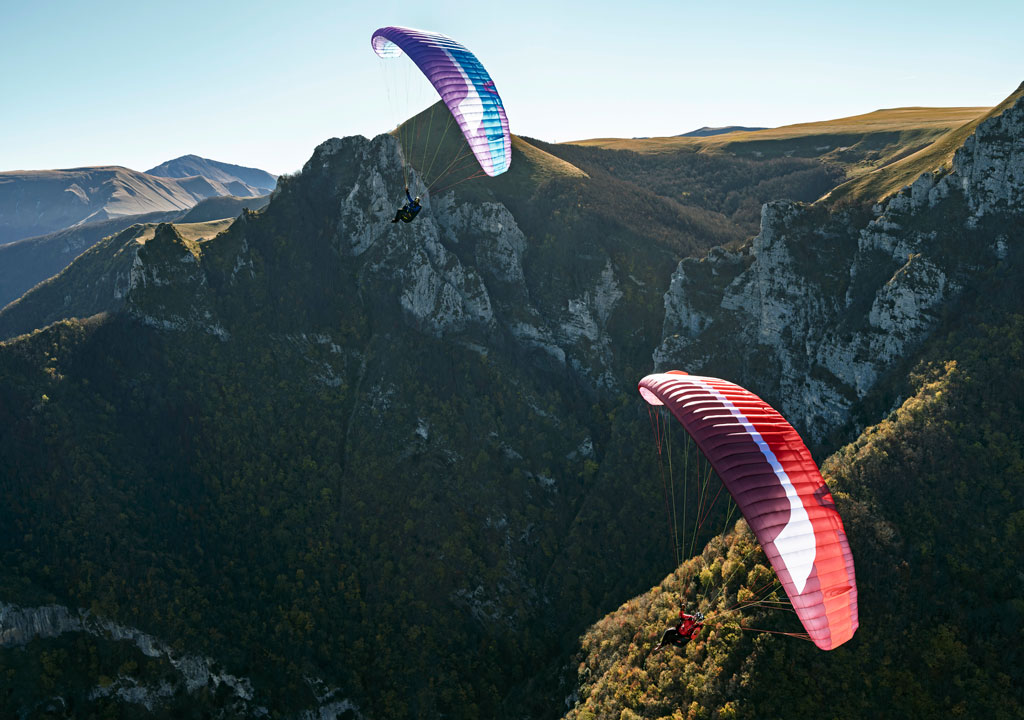
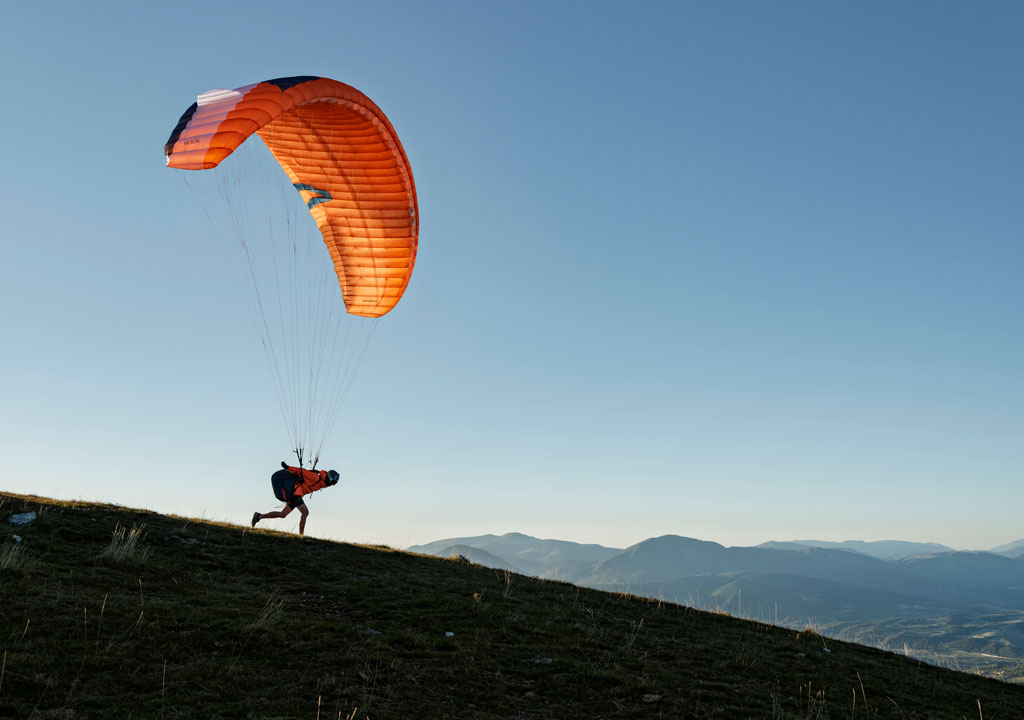
Easy to launch, forgiving in the air, and pleasantly linear on the brakes, the MESCAL7 goes far beyond a classic training wing. Its balanced performance characteristics enable continuous progression – from the practice slope and first thermals to first XC experiences.
The MESCAL7 is a wing that systematically builds flying skills: uncomplicated, technically well-defined, and with exactly the dynamics that enable real progress – without stress, but with full control.



JET FLAPS
Our JET FLAPS extend the green arc as you approach the stall point, which substantially increases safety
and also improves climb performance.

MINI RIBS
Doubling the number of cells at the trailing edge increases its shape stability substantially.
Advantage: fewer vortices improve the aerodynamics and with it the performance.

RIGID FOIL
Nylon wires wires keep the leading edge and the profile in shape and ensure a more constant ram air pressure.
Advantages: better take-off behaviour and more performance.

SMART LINK SYSTEM
Color coded seams on the risers to ensure that the risers are connected correctly and without being twisted.
red = left, blue = right

SHARK NOSE
Together with a corresponding wing design, the shark nose technology improves pressure distribution in the canopy substantially. Advantages: much more solid flying feeling and substantial performance gain, especially when gliding on bar.

3D-SHAPING
A precise calculation of the leading edge geometry and the installation of an additional strip of fabric reduce wrinkling in this sensitive part of the glider. Advantages: exact wing shape, more performance.

C-WIRES
Nylon wires sewn into the glider over the anchor points of the C-level lines. Advantages: better load distribution, reduced drag, more performance.
WINGLETS
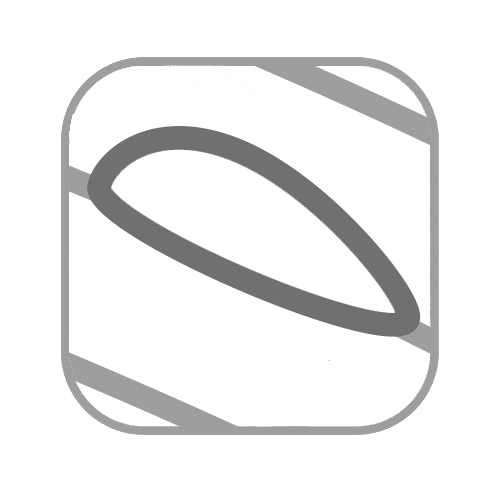
The winglets increase roll stability, enhance re-centering the canopy, improve spiral exit behavior, and reduce induced drag. The result: greater safety and a noticeable performance boost.

SAND RELEASE SYSTEM 2.0
Porous openings of the profile ribs at the trailing edge ensure that sand and dirt in the glider are automatically guided to the wingtip where they can trickle out. This helps preserve the material and “relieves” the trailing edge.
| Size | 75 | 85 | 95 | 105 | 115 | 135 |
|---|---|---|---|---|---|---|
| Cell number | 40 | 40 | 40 | 40 | 40 | 40 |
| Area flat (m²) | 21.70 | 23.68 | 25.22 | 26.80 | 28.57 | 30.97 |
| Area projected (m²) | 18.37 | 20.05 | 21.35 | 22.69 | 24.19 | 26.22 |
| Wingspan flat (m) | 10.21 | 10.66 | 11.00 | 11.34 | 11.71 | 12.19 |
| Wingspan projected (m) | 8.06 | 8.42 | 8.69 | 8.96 | 9.25 | 9.63 |
| Aspect ratio flat | 4.80 | 4.80 | 4.80 | 4.80 | 4.80 | 4.80 |
| Aspect ratio projected | 3.54 | 3.54 | 3.54 | 3.54 | 3.54 | 3.54 |
| min. profile depth (cm) | 83 | 87 | 90 | 93 | 96 | 100 |
| max. profile depth (cm) | 258 | 269 | 278 | 286 | 296 | 308 |
| Weight (kg) | 4.30 | 4.60 | 4.90 | 5.10 | 5.30 | 5.60 |
| Certified take-off weight (kg) | 55 - 75 | 60 - 85 | 70 - 95 | 80 - 105 | 90 - 115 | 105 - 135 |
| Homologation | LTF/EN A | LTF/EN A | LTF/EN A | LTF/EN A | LTF/EN A | LTF/EN A |
| Upper sail | Porcher Skytex Easyfly |
| Lower sail | Porcher Skytex Easyfly |
| Ribs | Dominico 30 DFM |
| Main lines | Edelrid 7343 - 230/190/140 |
| Middle lines | Edelrid 7343 - 140; Liros DSL 70 |
| Top lines | Edelrid 7343 - 140; Liros DSL 70 |
| Break lines | Liros DFLP 200/32, DSL 70; Edelrid 7343 - 190 |
| Risers | Güth & Wolf 20mm Gurtband |
How do I calculate my take-off weight?
Take-off weight is calculated by adding the weight of the pilot including clothes to the weight of the equipment. The equipment consists of the harness, the reserve chute, the paraglider itself, and any flight instruments and other baggage you may carry (e.g. rucksack, etc.).
What is the Smart Link system and how does it work?
The Smart Link system is a feature where each riser has a colored, continuous seam running from the suspension loop up to the C-riser. The red seam indicates the left side, and the blue seam indicates the right side. This ensures that the risers are attached on the correct side. Additionally, it allows for immediate identification if a riser is twisted. These same color-coded seams are also present on the new skywalk harnesses, thereby further enhancing safety.
What are JET FLAPS and how do they work?
JET FLAPS are a so-called split flap, like those on large airplanes. When the glider is braked, the airflow is routed through the glider, restoring smooth airflow. This extends brake line travel and softens the stall behavior.
Which advantages do the JET FLAPS on my skywalk glider offer me?
Lower flyable minimum airspeed. The speed range is wider and easier to control. The pilot has more time to react when flying near the stall point.
Does the MESCAL7 need to be specially packed?
The shape-retaining nylon rods in the leading edge ensure excellent profile stability, improve take-off behaviour and overall performance. They should therefore be packed cell on cell to avoid bending or kinking the rigid foils. However, because these rods are relatively short, a dedicated concertina bag is not required. All other reinforcements are made of flexible plastic rods that are highly resistant to kinking.
Is the MESCAL7 suitable for the winch?
Yes, the MESCAL7 is suitable for winch towing. Make sure you only take off from an approved winch at a flat angle from the ground. The pilot must have valid winch tow training and ensure that the winch operator has tow training that includes paragliding. When winch towing, always steer sensitively and do not overbrake, as the glider is already flying at an increased angle of attack. We recommend the use of a tow aid.
Is the MESCAL7 suitable for paramotor flights?
Yes, thanks to its pronounced roll and pitch stability as well as its balanced handling, the MESCAL7 is an excellent choice for entering the world of paramotor flying. This will soon be achieved with the MESCAL7 being certified according to DGAC “Fiche d’Identification – Classe 1”. A specially tuned paramotor riser will be available.
What are the glide ratio (L/D), trim and maximum speeds?
Generally, we do not publish performance data, as releasing such information would be considered unreliable for the following reasons:
1. The difference between aerodynamically favorable and unfavorable harnesses and sitting positions can be as much as a whole L/D number.
2. Performance increases with the size of the glider. A larger glider always performs better than the same glider in a smaller size.
3. In paragliding, there is no standardized procedure for measuring performance data. For example, speed varies with altitude and the associated different air pressure, but also with the total weight of the system.
Is it OK for me to shorten the brake lines on my skywalk paraglider?
Changing the length of the brake lines can have a negative effect on the flying characteristics and extreme flight behavior. The paraglider needs a little more lead when flying on speed bar, otherwise the glider could be braked unintentionally, leading to a loss of performance. When performing extreme flying maneuvers, shortening the brake lines too much can cause complications during recovery from collapses, parachutal stall, etc.
Your MESCAL7 package
- 1x Inner bag
- 1x Compression strap
- 1x Riser bag
- 1x BASIC GUIDE
- 1x Bandana
- 1x Sticker set
- 1x Self-adhesive repair patch